(Not) Belonging – Review

This is Happening Collective

Samuel Beckett Theatre

Tiger Dublin Fringe

12/09/15

Not-belonging-2

Devised and performed by Matthew O’Dwyer, Áine O’Hara and Sorcha Flanagan, (Not) Belonging is a deeply personal exploration of what it means to be a young person finding your feet in the world. Often funny, often serious, this production will strike a chord in some way with everyone who has worked to find their place in life.

The piece opens with each performer introducing themselves, setting the personal and open tone for the rest of the piece. Through a variety of performance styles each performer’s unique but connected experience of finding a place to belong is brought to life. The collective work brilliantly together, feeding each other’s energy in performing; it is obvious that this show was very much a collaborative effort with a balance of each voice shining through.

Deserving of a particular mention is the set, designed by Gemma McGuinness. With a main set piece which I can best describe as a versatile book of backdrops, the set was simple and innovative, providing a setting perfectly suited to the style of the performances. The only glitch in the design of the performance is the projection work. Though it is a good idea, and parts of it worked, because of the surface it was projected onto much of it was lost and I found myself being distracted from the performances by trying to work out what the images were. This is however, a minor issue that could be easily resolved. Overall the stage design was simple, well-planned and effective.

(Not) Belonging is an interesting and impressive piece of work from this emerging Dublin theatre collective. Shows about young people and teenagers can often stray into the territory of distanced patronisation but this piece certainly does not. Written from the hearts of the collective, written for their personal exploration of their experiences, written to connect with people who feel or have felt the same way as they do, (Not) Belonging is an engaging piece brimming with the vitality and drive of its creators.
Douze – Review

Smock Alley

Tiger Dublin Fringe

9/9/15

event-douze-500x500

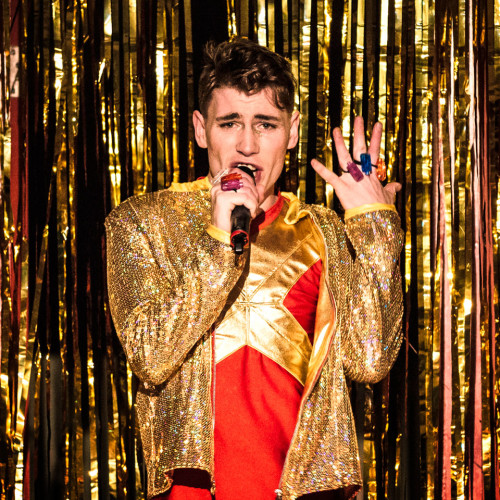
In a flurry of glitter, sequined hot-pants and shimmering gold curtains Xnthony, an Irish Eurovision hopeful, bursts onto the stage and for the next hour proceeds to present the songs and dances with which he intends to represent Ireland in Sweden 2016. The exuberance with which he, Hannah and Tiffany exclaim “We’re so excited!” and the vim with which they burst into each musical number is contagious; the audience is splitting a seam laughing and clapping along in no time.

This is a show that doesn’t take itself too seriously; yes, there were dud notes sung, the dances could definitely have been a bit more in time, and the props were touch-and-go, but it was enormous fun. I could spend this review talking about the things that went wrong, the moments of entanglement in sparkly gold fringes, the near miss with a bucket of confetti but I’m not. This show wasn’t polished, it was brash in the best possible way, brimming with enthusiasm and confidence. As the audience joined in with the songs, voted for their favourites and dissolved into helpless fits of shrieking giggles, it was obvious that this show was a roaring success in its own right.

A frolicking feast of invention and vivacity, Douze is a refreshing, glittery romp that it is hard not to enjoy.

Focus – Review

Firedoor Theatre Company

Players Theatre, Trinity College Dublin

18/08/15

focus_feature_

Written by Sheena Lambert and directed by David Fleming, Focus is a short, one act play which aims to examine “the predjudices of modern Irish society, and the hypocrisies that underly how we relate to religion, class, abortion, and each other.” However, in trying to cover such a lot of issues in under an hour, Focus overstretches itself and unravels.

Set around a focus group hastily cobbled together from family and friends, this play uses the questions posed to the group to frame its discussion of various issues in Irish society. It is a good basic idea, but through a combination of stilted dialogue and tenuous links between each topic of conversation, it quickly becomes a race to get as many issues covered in a short space of time, at the expense of a cohesive storyline. There are many promising moments throughout, with the initial amusing allusions to Suds’ involvement in the drugs trade, the introduction of a criminal investigation and the running bickering between the sisters over how their parents’ house should be kept, but these all peter out and are lost as issues are shoehorned into the dialogue.

It is the lack of cohesion that really pulls this piece down, the actors may have been good, but the dialogue between them lacks the flow and substance necessary to carry the play. This is particularly evident in the introduction of the topic of abortion when, in a pause in the conversation following a discussion of the role of the Catholic Church in peoples’ lives, Paul loudly announces that he thinks they were right in their stance on abortion. There is no prompt for this beyond a lingering lull in the conversation, but it is so pointedly dropped into the conversation that one can almost see the scene title flash up in front of your eyes.

Overall this piece has the feeling of an SPHE class drama, a piece of theatre crudely wrapped around issues that the group wishes to discuss with little thought given to dramatic structure and plot.

Spring Awakening – Review

Ill-Advised Theatre Company

Smock Alley

28/7/15

Spring Awakening is a heartbreaking story of innocence, oppression and discovery with an impressive score and powerful message. This production, directed by James O’Connor, is a competent and spirited rendition of it.

There was an impressive energy in the cast, with the three leads, Adam Tyrell as Melchior, Kevin C. Olohan as Moritz and Megan McDonnell, giving strong performances, both vocally and in terms of acting. Of the rest of the cast Shane O’Regan and Andy Carberry were particularly notable, with O’Regan switching between the character of Ernst, a shy schoolboy, and a rough reformatory inmate with such skill that it took me a few moments to recognise that it was the same actor. The only point that I would question about the cast is their manner of working as a chorus, though they worked well together for the most part, there were certain ensemble members who, at times, drew attention towards themselves when they were not meant to be the focus of the scene.

Though it is an intense piece, I found that the tension levels, particularly in the first half of the show, were kept too consistently high, leaving the actors with nowhere to go for the climatic scenes; there was little sense of intermittent crescendo. This was a pity as it meant that some of the stunning scenes like the number “Totally Fucked,” which was a show-stopping performance, did not stand out as much as they could have.

In technical terms the set and lighting were minimalistic yet powerful, with some especially beautiful features in Caoimhe Ní Fhaoláin’s lighting design at either side of the interval. I did however find the microphones used were an issue in terms of sound. While I understand why they were being used for the musical numbers, they needed to either be switched off for dialogue or the cast needed more practice using them as dialogue was lost or scenes broken by the sound of someone’s collar bumping the mic, a mic slipping or someone brushing their hand across it. This was an unfortunate issue as it sometimes distracted from what was otherwise a very moving and well-executed production.

      Though there were a couple of issues in directorial and technical terms, I feel that these can be easily ironed out as the run continues. Overall, Spring Awakening is a dynamic production that entertains and engages while portraying a potent and still frighteningly pertinent message.

Spring Awakening runs until Saturday 1st August.

The Shadow of a Gunman – Review

Abbey Theatre

Dir: Wayne Jordan

21/7/15

INBV-Theatre-Shadow-Of-A-Gunman

To me, Sean O’Casey is a literary magician. Everything about his writing from his naturally poetic language and sharp social and political insights, to his shrewdly realistic characters and perfectly paced action make O’Casey one of my favourite playwrights.That declared,I can move on to this particular production which I can safely say went far beyond simply doing justice to O’Casey’s writing.

It is a difficult balance to pull-off, but the entire cast, and every element of the design in the show managed to walk that line between humour and horror, laughter and tension. Bringing the show truly to life, this balance kept the characters down to earth, engaging the audience as they find life’s everyday humour even in such times of danger and tragedy.

The lighting design by Sarah-Jane Sheils subtly keeps pace with the action, with some striking moments which highlight perfectly the underlying tension in the play. This light falls on an understated, yet complete and effective patchwork of a set designed by Sarah Bacon which captures that essential marriage of comedy and tragedy that makes this play what it is.

Inhabiting this design is the cast, whose performances all compliment each other and come together to create a strikingly real world upon the stage. The stand-out performance however, was without a doubt  Mark O’Halloran’s as Donal Davoren. From the moment the curtain went up, O’Halloran did not simply stand on the stage, he possessed it, even when silent or still.  O’Halloran’s performance was commanding and compelling, bringing the Davoren vividly to life.

Wayne Jordan’s The Shadow of a Gunman is a dynamic and potent production that draws its audience into the lives, hearts and minds of these inhabitants of this 1920s Dublin tenement with passion and perspicacity.

The Shadow of a Gunman runs until the 1st of August.

Charolais

Moran’s Bar

Clonmel Junction Festival

9/7/15

Image processed by CodeCarvings Piczard ### FREE Community Edition ### on 2015-05-22 14:21:48Z | http://piczard.com | http://codecarvings.com

I laughed the laugh that I’m normally mortified to laugh in public. From the setting in the back room of Moran’s to the natural, open performance by Nonie Stapleton Charolais had the audience laughing and groaning in empathy with the character of Siobhán throughout.

Stapleton’s portrayal of each character, directed by Barbara Ní Chaoimh, was delivered with skilled characterisation, with the amorous French heifer coming to life just as engagingly as Breda the crotchety mother in law or the long suffering Siobhán. It was the little things that made the performance so impressive, like the the moo-ing moments in singing songs as the Charolais, the wry smile of Siobhán and the tight lipped disapproval of Breda.

The performance was built on the solid foundation Stapleton’s of well-paced and evocative writing, again bringing the characters and stories to life with vivacity and sagacity. Charolais is an hilarious, and sometimes heart-wrenching, tale of the age-old rivalry between between the wife and the mistress…with a bovine twist!

Overture – A Magical Italian Bubble Concerto

White Memorial Theatre

Clonmel Junction Festival

9/7/15

Bubbleshow

I may be 18, but for the time I sat in the balcony of the White Memorial Theatre this afternoon, I might have been mistaken for an open-mouthed, wide-eyed, wonder-filled five-year old. Such was my enjoyment of this show, created and performed by Michele Caffagi.

Caffagi creates a mesmerising orchestra of bubbles, using everything from a clarinet to a tennis net to produce shimmering arcs, swirling storms, enormous orbs and flurrying clouds of bubbles across the stage. Not only is his skill in doing this impressive, but his sweet, light-hearted, silent-vaudevillian style of performance brings an endearing energy and enthusiasm to the show with each little dance and satisfied giggle. By playing around in the audience and bringing children and adults alike up onstage to take part in his brilliant bubbly tricks, Caffagi invites an enthusiasm from the audience that reflects his on stage. Even the only flaw I found in the production becomes a virtue in Caffiagi’s performance as he recovered expertly from some late responses to lighting cues.

With children jumping around catching bubbles, parents laughing and joining in, and Caffiagi leading this capering concerto of fun, Overture is a sweet and fanciful romp through a world of iridescent magic.

Review – In Arabia We’d All Be Kings

Some Yank’s Theatre Company

Players Theatre, Trinity College Dublin

1st July 2015

arbia

A dodgy New York accent is a make-or-break; it can have me cringing throughout a production and drag a good play down and make a bad one truly painful. This wasn’t the case with this production of In Arabia We’d All Be Kings directed by Liam Hallahan. It is testament to the quality of the piece that within minutes I had forgotten my annoyance upon hearing questionable American accents and was caught in this emotional melting-pot of a play.

I can’t decide how to describe this piece; the combination of harrowing tales and poignant humour makes this play teeter along the hazy, delicate line between tragedy and laughter. There is such desolation in the city landscape of torn and patched relationships, of crime, of crack, of sex bought and sold, of love, of violence, and of community around this one little bar. But permeating this fog are moments of humour and hope. It seems like a piece that couldn’t be laughed at, but perhaps it is just this that makes the humour in it so powerful. The audience’s release of a belly-laugh, or burst of rueful laughter brought a realistic edge to the piece that kept it well away from becoming a soap-operatic melodramatic misery-fest. Guirgis’ writing captures the balance of real life and all of its mixtures of light and dark with skill and perspicacity throughout.

This writing is brought to life with passion and skill by the entire cast, with every performer taking their place in a strong ensemble. The fluctuations in the tone and levels of tension in the writing were captured in every character, bringing the stories sharply and vividly to life. Alongside this, the design, was simple and versatile, with some aspects of the lighting design by Ciaran Gallagher standing out as particularly effective, especially towards the end of the piece.

          In Arabia We’d All Be Kings is a moving, gritty and tragically funny piece of theatre. The team involved in creating this production need not venture to Arabia because for the two hours or so that their work occupies the stage, they are most definitely Kings.

Running until 11th July

Review – A Lesson in When to Quit

Originally published on The Public Reviews

ALESSONINWHENTOQUIT3-THEATRE-UPSTAIRS-317x330

The Cup Theatre Company

Theatre Upstairs, Eden Quay, Dublin

     A Lesson in When to Quit could have done well to have learned the lesson in its title. This show, written by Teri Fitzgerald and directed by Philip Doherty, began promisingly, but soon revealed that its only redeeming feature was that it was short. Billed as a comic, musical farce it opened with classic humour and gregarious gumption, however they fail to sustain this beyond the first quarter of the show.

Firstly, as a musical, the show lacked skill in composition and performance of songs, with many of them falling flat, losing timing and straying out of tune. This appeared to be partly down to poor writing, with the performers having to battle the timing of the song to fit the lyrics to the tune. Compounding this issue, the actors’ attempts to maintain their accents and vocal characterisation often took precedence over precision in performance of the musical numbers.

Also failing in creativity and skill was the lighting design by Shane McGill which returned regularly to an overwhelming red wash of the stage at every opportunity. The first time it was used, when the character of Dick Headski reveals his bad side, it was effective but once it had been used to portray further bad guy moments, a romantic evening between the leads, night time, and the fall of democracy to communism…well, it lost more than a little of its effect.

This could however have been glossed over had the gusto and enthusiasm displayed by the actors in the opening scene been maintained in the same vein. However, the script quickly deteriorated into crass, base humour. With coarse jokes made about sensitive topics, the female characters placed into stripper roles, some questionable portrayals of various countries and cultures, and a number of tasteless scenes added which made some members of the audience visibly cringe and shake their heads. And I haven’t even touched on the portrayal of mental health issues and Judaism. As well as being crude and contrived, many of these moments were entirely unnecessary to the plot and had obviously been added for the sole purpose of racking up easy gags.

     A Lesson in When to Quit took an idea that could easily have been a funny and endearing evening’s entertainment and turned it into a stream of crass attempts to garner a cheap laugh.

Review: Pals-The Irish at Gallipoli

Anu Productions

National Museum of Ireland, Collins Barracks

11/4/15

pals

I have been in Collins Barracks lots of times, I know quite a bit about the First World War, I know the grim realities of conflict that shattered the heroic illusions of many young soldiers, but never have these things been more alive, or more striking in my mind than as I watched Pals- The Irish at Gallipoli this afternoon. Telling the story of the 7th Battalion of the Royal Dublin Fusiliers at Gallipoli, this immersive piece gives a powerful insight into the horrific experiences of a group of young Dublin rugby players on the battlefields at Gallipoli and presents the audience with striking messages about conflict, friendship and attitudes towards the Irish members of the British army at the time.

As it brings the audience through the experiences of the soldiers; of leaving their families, of the trenches, of snatching moments of fun amidst the destruction with songs and games, the agony of being injured in battle, and the later lasting agony of revisiting those moments even long after leaving the front lines, Pals switches between raw, painful reality, and equally moving, terrifying symbolism to bring to the fore the real experiences of these men.

The repetition of the phrase “Would Ireland be proud of us?” is a potent one, which is crucial for the soldiers in the piece. When we later see the image of a woman mechanically throwing envelopes on the ground with the names of the dead, or the sight of a man crying in terror and agony on the ground, this question becomes a potent one for the audience, calling the varied historical perspectives on Irish members of the British army into sharp focus.

The superb creation and writing of the piece was brought to life with energy and feeling by the excellent cast, comprised of John Cronin, Liam Heslin, Laura Murray, Kevin Olohan and Thomas Reilly. This was further complimented by the forceful and impressive lighting and sound design by Sarah Jane Shiels and Carl Kennedy. This piece is structured to make you feel that you are at the heart of the tale, from the actors sitting beside you telling you their story, to sitting on the less-than-luxurious beds; it all heightened the experience of the stark reality of this group of young Dublin men in Gallipoli. I was so moved and struck by the piece that, as one of the soldiers asked me to give him a cheer as he left for war, I wanted to say no, to tell him to stay, to warn him that his and his friends’ dreams of heroism and cheerful camaraderie on the battlefield would soon be shattered by the horrific reality of the war. It took a few minutes after leaving the performance for that sense of concern and fear for the soldiers to leave. This was a powerful, consuming piece of theatre that brings history to life with expertise.

Pals- The Irish at Gallipoli runs at the National Museum of Ireland, Collins Barracks until 30th April