A Midsummer Night’s Dream – Edinburgh Fringe Review

The Handlebards

Royal Botanic Garden

23/08/17

2017HANDLEB_AHF

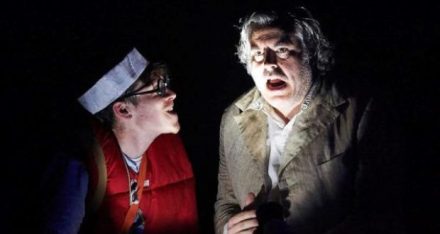
Shakespeare is funny; his raucous revelry is nothing new or newsworthy, but The Handlebards’ production of A Midsummer Night’s Dream takes this a headline-worthy step further. While maintaining the integrity of the play, the all-male troupe takes Shakespeare’s work and runs amok with it, leaving their audience wiping tears of laughter from their cheeks clutching their sides for fear of their splitting.

The four performers perform every character with skill and dexterity (and a little help from the audience), switching between characters at the drop of a hat…or the ding of a bicycle bell. The direction clearly plays to each performer’s strengths, with Matthew Seager excelling in the high-strung role of Helena, Callum Brodie playing an hilariously unsettling Puck, and Tom Dixon and Calum Hughes-Mackintosh injecting mischief into every available moment of the play.  All four performers evidently know the play inside out, staying faithful to the story whilst playing irreverently with it throughout. Particularly notable is the way in which the actors constantly upstage each other and play to the audience outside the play, something I might criticise in another production, but which is an intrinsic part of the comedy in this one; each performer holds his own and the ensemble is well balanced on stage. Particular examples of this include Dixon’s business with the puppet trio of Snout, Snug and Starveling, the mischievous administering of the love potion, and a certain incident with a bicycle.

The construction of the set and props similarly does not take itself too seriously, but is still well designed and innovative. From the bicycle powered backdrops, to Titania’s formidable wings, and the use of puppetry, the production is fast-paced and keeps surprising the audience with new theatrical devices and ideas. Add to this the continuing theme of bicycles with which the company leaves its mark, and you have a distinctive production that confidently strides in its own direction.

Taking one of Shakespeare’s most madcap plays and building upon it with their own energy, the company delivers a ceaselessly entertaining production. For anyone who finds themselves infected with the idea that the Bard is boring, anyone who doesn’t, and anyone in between, The Handlebards’ production of A Midsummer Night’s Dream is a must-see feast of riotous revelry and mischief.

A Midsummer Night’s Dream runs at the Royal Botanic Gardens until 26th August as part of the Edinburgh Festival Fringe.

 

Dommy B Presents… – Edinburgh Fringe Review

Hispaniola, Drummond Street

23/08/17

2017DOMMYBP_ABL

Poetry as a schoolchild is sadly often a rather arduous affair. Often our first introduction to poetry is through learning worthy verses by rote, or reading poetry almost purely for the purpose of memorising it, rarely getting a taste of the excitement and insight poetry can provide. Artists like Dommy B are the perfect antidote to that. Brimming with enthusiasm and energy, Dommy B takes to the stage in Dommy B Presents…, a vivacious performance poetry show aimed at children aged five and above.

Telling the story of Spark the Goblin, Dommy B confidently includes every member of the audience in his storytelling. Not only does he include call and response and repetition sections, but he gathers suggestions from the audience with which he improvises verses. Even with the most bizarre suggestions from children in the audience, “artichoke” being a personal favourite, Dommy B comes up with entertaining verses and rhymes. His interactions with the audience, particularly its younger members, are easy and assured, never seeming forced or awkward, and he keeps the audience entirely on board with the story from start to finish.

As you join in the tale of Spark the Goblin as he learns the importance of kindness, you will be treated to a fun story, sharp writing and a memorable collective experience not only as audience members, but as co-creators of the poetry performed in front of you.

Dommy B Presents… runs at Hispaniola, Drummond Street until 26th August as part of the Edinburgh Festival Fringe.


Calvinball – Edinburgh Fringe Review

Royal Botanic Gardens

Ipdip Theatre

23/08/17

calvinball

Have you ever played a game of Calvinball?

If not, then you should.

In a charming adventure for young children (0-5 year olds), Ipdip theatre create an energetic and enthusiastic game of Calvinball. With a missing set of rules, the performers and audience all become “playmakers” as the game develops.

The performers, Christie Russell-Brown, Robbie Gordon and Camille Marmie, play to their audience with enthusiasm and skill; they read their audience, engaging each child differently and allowing them to participate at their own pace. Composed of elements of many recognisable drama and improvisation games, the show is an open experience for each child to learn and play, with the performers engaging on a one-to-one level with the children at different points, and encouraging group play at others.

While sometimes the language used by the performers evidently goes above the heads of some of the children in the audience, the combination of language and physicality caters to both the younger and slightly older children, giving each the chance to understand it in their own way.  Where a slightly older child may understand and learn from “The Sorry Song” or the song teaching an adapted version of the Gay Gordons, for example, the young babies in the audience can enjoy the sensory experience of hearing the music, being danced with and having free access to the various props.

Calvinball is a delightful production for young audiences which encourages imagination and play in a theatrical experience that is made open and accessible to every child (and grown-up) in the audience.

Calvinball  runs at the Royal Botanic Gardens until August 27th as part of the Edinburgh Festival Fringe.
The Tempest – Edinburgh Fringe Review

C Theatre

C Venue South Garden

22/08/17


Miranda.jpg

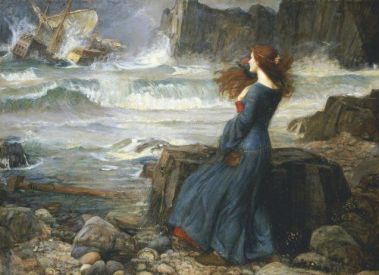
Miranda, The Tempest, 1916 by John William Waterhouse 


I’m no purist when it comes to Shakespeare; adaptation and reinvention are part of what has kept the bard alive for the last few centuries. C Theatre’s production of The Tempest alters many aspects of the play, swapping the genders of certain characters, presenting an unconventional Caliban, and condensing the production into less than 90 minutes.

Some of these changes were very successful, with Prospera and Ariel commanding the stage and delivering strong performances, and the same actor who played Miranda doubling as an entertaining Trinculo. However, other changes did not sit as well with the production, leaving questions as to the reasoning behind the director’s decisions. One such change was the portrayal of Caliban as more of a petulant teen than a bitter and angry subject of Prospera’s rule. Singing his anger as he strums an electric guitar takes away much of the credibility of the character; when he, Trinculo and Stephano plot to murder and usurp Prospera as she sleeps, it does not feel like a plausible threat to Prospera’s life. Similarly, though some comedic additions to the productions were effective, there were numerous others that detracted from the power of the story. The sight of Miranda and Ferdinand grappling with enormous novelty chess pieces does not exactly evoke the romantic ending of Shakespeare’s script. The ending   was also weakened by the changes made to Gonzalo’s character which rendered him a shallow and uncertain character whose relationship to Prospera is not portrayed with any definition.

However, there were some strong points to the production worth mentioning, including the imaginative design and staging which made full use of the garden it was staged in. With Ariel and her spirits flitting amongst the audience, it is hard not to get caught up in the magical world of Shakespeare’s final play.

Though visually charming, C Theatre’s production of The Tempest unfortunately sacrifices the strength of  some of Shakespeare’s original script in favour of contemporary references and easy laughs.

Alice in Wonderland – Edinburgh Fringe Review

Not Cricket Productions

Underbelly – White Belly

22/8/17

alice

Lewis Carroll’s Alice’s Adventures in Wonderland has been the subject of more adaptations than I could count, with four shows based on it in this year’s Fringe programme alone.  As a novel bathed in nonsense, fantasy and imagination, it provides myriad opportunities to explore new ways of staging it and bringing the madcap tea party, the sneezing duchess and her porcine child, the mock turtle, and the Queen of Hearts’ infamous croquet game to life. Adapted and directed by Kate Stephenson, Not Cricket Productions’ approach is a fairly traditional one, taking in most of the main parts of the story and presenting them in a recognisable manner, with Alice’s blue dress, the white rabbit’s waistcoat and the Cheshire cat’s lingering grin. However, taking this faithful approach with only an hour long show does lead to a production that feels rushed and underdeveloped.

From the very start, the direction and performance of the piece seems frantic and hurried; a whistle-stop tour of the plot. The rapid leaps from scene to scene, without any of them truly having the chance to develop, mean that the audience is left to fill in gaps or expand on brief exposition. While this is possible (though not ideal) for an older audience member who may know the story, for the young audience it is aimed at it could be confusing, and leave a patchy impression of a classic story. This frenetic pacing is exacerbated by performances that begin and remain at a high, overwrought level that not only unbalances the emotional energy of the piece, but results in lines being lost in the speed of their delivery.

Fitting in with Carroll’s vivid and varied childlike world, the costume and prop designs were, though simple and makeshift (with pink umbrellas as flamingos, an old bathtub as the mock turtle’s shell, and some lanterns to denote the Cheshire Cat), effective in conveying the idea of a child’s imaginative world. Taken on its own, this is a strong point of the production, but added to the direction and performances as described before, there were certain points at which the combination gave the show a disjointed air.

Overall this production tries to do too much and overstretches, including introducing musical numbers that fall flat, audience interaction that distracts by overlapping with onstage action, and aesthetic ideas that are not followed through on. Though it presents interesting and promising ideas, Alice in Wonderland feels like a production that has been put on stage while still in a workshop state.

Alice in Wonderland runs at Underbelly, Cowgate, until 27th August.

The Giant Jam Sandwich – Edinburgh Fringe Review

The Giant Jam Sandwich

Pleasance Courtyard

22/08/17

GJSandwich_banner.jpg

Based on the classic children’s book of the same name, written by Janet Burroway and illustrated by John Vernon Lord, The Giant Jam Sandwich is the hilarious and madcap story of the town of Itching Down and how its residents tackle an invasion by four million bees.  Written and directed by Jack McNamara, with music by James Atherton, this production is a high quality, entertaining piece of musical theatre for young audiences.

Appealing to an age group of 3-7 year olds, the production takes many opportunities to educate as well as entertain, involving the audience in a song about how bread is made, talking about pollination, and delivering lessons about teamwork. However, there is never the sense that the production is playing down to its audience, or sacrificing any technical or artistic quality in favour of dispensing information. From the opening scenes, in which the narrator lays out the setting in storybook style as the characters mime, The Giant Jam Sandwich establishes itself as a well-crafted, sharp production that proves entertaining and delightful for children and adults alike.

The three performers, Sarah Ratheram, Christopher Finn and Paul Critoph, all deliver strong performances, with no qualms about playing directly to, and engaging with their young audience. Finn is a particularly versatile performer, and switches between numerous entertaining characters with ease and spot-on comic timing.  Between the performers’ abilities and the clever direction, which maintained the storytelling style of the picture book while still allowing the piece to blossom into a musical, this is a strong and engaging piece of family theatre. With a direct approach that ensures the children in the audience are on a level with the performers, and a well rounded balance of classic comedy, contemporary references, music, and storytelling, The Giant Jam Sandwich is a perfect introduction to theatre for young audiences.

The Giant Jam Sandwich runs at the Pleasance Courtyard until 28th August as part of the Edinburgh Festival Fringe.
The Vagina Dialogues – Review

(Preview Performance)

Theatre N16, Balham

28/07/17


vagina dialogues

Image by Celine Sophie FP


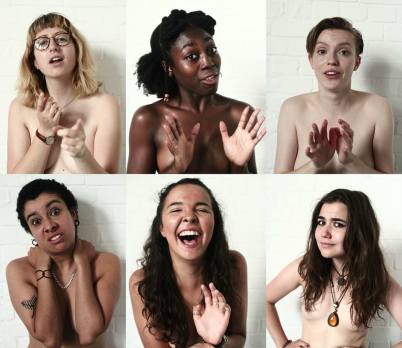
The Vagina Dialogues, a title more than a little reminiscent of Eve Ensler’s oft-performed 1996 work The Vagina Monologues. However, as soon as the audience enters the auditorium, in which the cast is standing in a circle humming a low, insistent tune, this piece written and performed by The Völvas, asserts itself as a fresh and urgent piece of feminist theatre for 2017.

With each section of the piece written and performed by members of the company based on their own personal experiences or interests, The Vagina Dialogues is an engaging exploration and celebration of diversity and intersectional feminism. From the light hearted segments, such as the breasty ballet (my phrase) at the opening of the piece and an hilarious and all-too-relatable song  about drunken-flirting written and performed by Jazmin Qunta, to the more serious pieces about sexual assault, racial identity, and bodily autonomy, this show  addresses an impressive range of current feminist issues. Nancy Ofori Geywu provides side-splitting comedy with a serious message in her piece about an internet-troll, Tosh, who suggests that a woman would be more beautiful if she lightened her skin. She also appears with MJ Ashton in an entertaining, recurrent exploration of the female orgasm, which the audience soon becomes invested in, as though waiting for a winning World-Cup goal. Alongside these comic pieces, some particularly note-worthy sections bring the audience to breath-held silences, as Qunta discusses a woman’s choice to have an abortion (a particularly hard-hitting piece to watch from an Irish perspective), and Ashton and Sarah Jeanpierre perform a beautiful, bittersweet movement piece.

These artists bring a contagious unadulterated anger, pride, determination and passion to the stage, reminding me of bell hooks’ words, “I will not have my life narrowed down. I will not bow down to somebody else’s whim or to someone else’s ignorance.”  The Vagina Dialogues is an honest, empowering piece of theatre in which the creators lay themselves bare in front of the audience, and in doing so lay bare the enormous issues still faced by women in our society, and that’s something.

The Vagina Dialogues runs at The Edinburgh Fringe Festival from 17th-27th August.


Review – Bridle

King’s Head Theatre, London

11/7/17

DDfZqDxXkAAU-8O

Originally published on The Reviews Hub

I’m just a bit much.

The heroine of Bridle is a modern woman. She is a feminist, a 21st Century feminist. She drinks, smokes, swears, spurns shame, and embraces her sexuality. She shows and tells the audience all of this, at the same time as telling an invisible and reticent but omnipresent figure of authority who, it transpires, has imprisoned her for indecency. In her world, female sexuality and agency are to be controlled and repressed, not only by social restrictions but by law. This  escalation or exaggeration of reality and the ambiguity of the setting both allow for a frank and uninhibited discussion of female sexuality.

In an era of raunch feminism, revenge porn, and hypersexuality, the line between empowerment and objectification is a constantly debated one. Bridle, written and performed by Stephanie Martin, raises interesting questions about the levels of agency of its main character; she behaves as she does just because she wants to, or does she? Though her discussion of her actions and experiences are, for the most part shameless and defiant, there are points at which she gives the impression that she felt obliged to cross lines she wasn’t comfortable with, or maintain an act that wasn’t always easy to perform. Her constant wish to entirely control her own sexuality and life more generally serves as a reminder of the many obstacles still faced by women in the pursuit of agency, often represented by the protagonist’s fair-weather-feminist boyfriend, James. He patronises her, reminding her of his feminist credentials and good intentions while denying her agency regarding her own sexuality and dismissing her desires as a product of patriarchal oppression.

Martin employs numerous effective theatrical devices and techniques to convey her story and message, using recorded voices for those of James, her imprisoner, and her father, and veering between a microphone and her own un-amplified voice to add layers to her solo performance and highlight certain points of her narrative. The ambiguity mentioned previously is an intriguing, if not always entirely effective, feature.

Within the narrative, Martin creates a recognisable but slightly altered society, gradually revealing that certain aspects of female sexuality and agency have been criminalised, but she also creates an ambiguity within her performance, breaking the fourth wall from the start and indulging in intimate and intense moments of engagement with the audience, while still delivering her narrative to the omnipresent imprisoner. Though this ambiguity does work in some ways, creating a new frame through which the audience can examine the topics Martin raises, it at times seems to be taken too far and leaves loose ends that, while they could be seen as an opportunity for the audience to make up their own minds on the subject, leave an impression of uncertainty or inconsistency regarding certain views and ideas suggested. Overall, however, Martin’s performance is an engaging and effective one, striking the balance between performance and direct interaction well, and bringing out the numerous facets of her character in a rounded yet concise development.

With no set beyond the single microphone, and only a basic lighting design, the evolution of the narrative depends almost entirely on Martin’s writing and performance and, while the writing strays a little and frays certain threads (as mentioned before), Martin delivers a thought-provoking and entertaining production that, as the old cliché goes, will first make an audience laugh, then make them think.

trhlogo

Review – King Kong (A Comedy)

The Vaults Theatre, London

1/7/17

King-Kong-©-Geraint-Lewis-e1498908241592

Originally published on The Reviews Hub.

With eight films released since 1933, and another planned, King Kong has been a cinematic stalwart for over eight decades. Despite, or perhaps as a result of, his status as a classic cinema character, bringing Kong from the screen to the stage is almost as daunting as bringing him from Skull Island to New York. However, Daniel Clarkson and Owen Lewis present an entertaining and effective production that finds ever-inventive methods of overcoming the difficulties of scale and perspective that the idea of putting Kong on stage presents.

King Kong (A Comedy) blends the original story with contemporary and currently topical satire and classic comic devices to create a hilarious and clever show that wins its audience over within minutes.

The classic wordplay and slapstick gags throughout are both sharply written and well performed, with each actor demonstrating strong comic timing and delivery. It must, however, be mentioned that on this particular night, during one raucously funny scene, the actors did corpse repeatedly, which detracts from the theatrical efficiency of the joke; the actors laughing is akin to a magician revealing a trick as he performs it.

Outside of this scene, the timing of delivery and the physical humour in the production, when combined with the versatile and expressive lighting design by Tim Mascall and the set design by Simon Scullion, is adroit and impressive.

Both pop-culture and political references are integrated well into the script, with pointed comments about misogyny, Trump, Godzilla, and other varied horrors of the modern world scattered
throughout the show. The characters, caricatures of the characters from the original (with a few comic extras thrown in, such as “Token guy”) make liberal use of stereotype and stock features, but with classic comic inversions that make them dramatically self-aware. It is largely this self-awareness that makes King Kong (A Comedy) as successful a comedy as it is.

From the clever design to the strong performances, and the classic gags to the little details such as the monkey themed snacks and pre-show music, King Kong (A Comedy), is a well crafted comic take on a classic of the cinema.

trhlogo

I am a Bird Now – Review

Theatre Upstairs

06/06/17


bird

Image by Ste Murray


Written and performed by Ross Gaynor, I am a Bird Now traces the distinct but intertwined threads of identity and trauma through three acts, titled Bruce, Donna, and Anthony (the three names the character assumes).  As the character traverses the evolution of their own identity and relationships with the lingering effects of a number of traumatic experiences, including having worked as a nurse after the July 2005 London bombing, we are invited to understand the difficulties this has created and the high and low points of their experience.

Under Sheils’ direction, Gaynor delivers a strong performance throughout, capturing the physicality of the character and layering the different aspects of his character with dexterity and skill. There are points at which the pacing of the narrative seemed drawn out further than necessary, and may have benefited from being condensed. However, the gradual building and exposition of the character is, for the most part, well-woven and produces a strong character whose strength is in their imperfection. With the recurrent images and symbolism of the vitruvian man, masks and costume, visual representations of the character’s questions around their gender identity are interwoven throughout the design and performance.

This symbolism is conveyed well by Naomi Faughnan’s set and costume designs, with a large image of the vitruvian man dominating the stage and the trappings of a dressing room surrounding it. Similarly, Eoin Byrne’s lighting design captures the liminal state the character inhabits, with the balance of light and dark providing a visual manifestation of the character’s evolution.

In an incisive exploration of identity in crisis, I am a Bird Now brings a multi-faceted character to the stage and lays bare the good, the bad, and the ugly of their humanity.