Overture – A Magical Italian Bubble Concerto

White Memorial Theatre

Clonmel Junction Festival

9/7/15

Bubbleshow

I may be 18, but for the time I sat in the balcony of the White Memorial Theatre this afternoon, I might have been mistaken for an open-mouthed, wide-eyed, wonder-filled five-year old. Such was my enjoyment of this show, created and performed by Michele Caffagi.

Caffagi creates a mesmerising orchestra of bubbles, using everything from a clarinet to a tennis net to produce shimmering arcs, swirling storms, enormous orbs and flurrying clouds of bubbles across the stage. Not only is his skill in doing this impressive, but his sweet, light-hearted, silent-vaudevillian style of performance brings an endearing energy and enthusiasm to the show with each little dance and satisfied giggle. By playing around in the audience and bringing children and adults alike up onstage to take part in his brilliant bubbly tricks, Caffagi invites an enthusiasm from the audience that reflects his on stage. Even the only flaw I found in the production becomes a virtue in Caffiagi’s performance as he recovered expertly from some late responses to lighting cues.

With children jumping around catching bubbles, parents laughing and joining in, and Caffiagi leading this capering concerto of fun, Overture is a sweet and fanciful romp through a world of iridescent magic.

Little Acorns

acorn

Last month I went to Theatre Forum’s All-Ireland Performing Arts Conference (APAC) for the first time and it was brilliant. I left Sligo having done the seemingly impossible and become even more excited about my career choice and even more enthusiastic about the arts. The spark for this was the torrent of ideas and that flowed over the course of the two days. There were myriad inspiring and interesting talks from practitioners and people such as poetician Brigitta Jónsdóttir and Sir John Tusa and, just as importantly, there was constant conversation flowing around the venue, in the hotel and even travelling to and from Sligo. The conversation made its way onto Twitter and Facebook and just a few days ago podcasts of the talks were published on Theatre Forum’s website, giving anyone and everyone with access to the internet a chance to engage. (The podcasts are available here. Have a listen to some of the fantastic speakers, and keep an ear out for yours truly!)

This sort of sharing of thoughts, opinions and ideas is invaluably important in the arts. All too often ideas are kept in little locked drawers until they are perfected, until the finished product has been completed, and I think this needs to change. I’m as guilty of hiding away some piece of work that I may love but can’t entrust to anyone else until it is finished. But it never is. Art is always evolving and changing. Take a show for example; does it stay exactly the same for every night of the run? Of course not; the performers and crew change it slightly each night whether consciously or unconsciously reacting to events and surroundings. A song will change with every performance, with every voice that sings it. A poem will never be read in exactly the same way by two different people. A painting will look different from every angle and in every kind of light. Just like this, an idea will never quite be the same for each person, and that is the beauty of it. As soon as you share an idea it begins to grow, it takes breath and energy from whoever sees it from a similar, but refreshingly different angle to yours.

So I say talk to someone about your grand idea. Read a friend that poem that you think is a bit rubbish. Tell your housemate what it is that you have been cooped up writing for the past three evenings, only emerging from your room to replenish biscuit supplies and refill your teapot. Release your idea into the world, like a kite soaring into the sky guided by the string in your hand.

As Goethe once wisely said:

“Daring ideas are like chessmen moved forward: they may be beaten, but they may start a winning game.”

Review – In Arabia We’d All Be Kings

Some Yank’s Theatre Company

Players Theatre, Trinity College Dublin

1st July 2015

arbia

A dodgy New York accent is a make-or-break; it can have me cringing throughout a production and drag a good play down and make a bad one truly painful. This wasn’t the case with this production of In Arabia We’d All Be Kings directed by Liam Hallahan. It is testament to the quality of the piece that within minutes I had forgotten my annoyance upon hearing questionable American accents and was caught in this emotional melting-pot of a play.

I can’t decide how to describe this piece; the combination of harrowing tales and poignant humour makes this play teeter along the hazy, delicate line between tragedy and laughter. There is such desolation in the city landscape of torn and patched relationships, of crime, of crack, of sex bought and sold, of love, of violence, and of community around this one little bar. But permeating this fog are moments of humour and hope. It seems like a piece that couldn’t be laughed at, but perhaps it is just this that makes the humour in it so powerful. The audience’s release of a belly-laugh, or burst of rueful laughter brought a realistic edge to the piece that kept it well away from becoming a soap-operatic melodramatic misery-fest. Guirgis’ writing captures the balance of real life and all of its mixtures of light and dark with skill and perspicacity throughout.

This writing is brought to life with passion and skill by the entire cast, with every performer taking their place in a strong ensemble. The fluctuations in the tone and levels of tension in the writing were captured in every character, bringing the stories sharply and vividly to life. Alongside this, the design, was simple and versatile, with some aspects of the lighting design by Ciaran Gallagher standing out as particularly effective, especially towards the end of the piece.

          In Arabia We’d All Be Kings is a moving, gritty and tragically funny piece of theatre. The team involved in creating this production need not venture to Arabia because for the two hours or so that their work occupies the stage, they are most definitely Kings.

Running until 11th July

Review – A Lesson in When to Quit

Originally published on The Public Reviews

ALESSONINWHENTOQUIT3-THEATRE-UPSTAIRS-317x330

The Cup Theatre Company

Theatre Upstairs, Eden Quay, Dublin

     A Lesson in When to Quit could have done well to have learned the lesson in its title. This show, written by Teri Fitzgerald and directed by Philip Doherty, began promisingly, but soon revealed that its only redeeming feature was that it was short. Billed as a comic, musical farce it opened with classic humour and gregarious gumption, however they fail to sustain this beyond the first quarter of the show.

Firstly, as a musical, the show lacked skill in composition and performance of songs, with many of them falling flat, losing timing and straying out of tune. This appeared to be partly down to poor writing, with the performers having to battle the timing of the song to fit the lyrics to the tune. Compounding this issue, the actors’ attempts to maintain their accents and vocal characterisation often took precedence over precision in performance of the musical numbers.

Also failing in creativity and skill was the lighting design by Shane McGill which returned regularly to an overwhelming red wash of the stage at every opportunity. The first time it was used, when the character of Dick Headski reveals his bad side, it was effective but once it had been used to portray further bad guy moments, a romantic evening between the leads, night time, and the fall of democracy to communism…well, it lost more than a little of its effect.

This could however have been glossed over had the gusto and enthusiasm displayed by the actors in the opening scene been maintained in the same vein. However, the script quickly deteriorated into crass, base humour. With coarse jokes made about sensitive topics, the female characters placed into stripper roles, some questionable portrayals of various countries and cultures, and a number of tasteless scenes added which made some members of the audience visibly cringe and shake their heads. And I haven’t even touched on the portrayal of mental health issues and Judaism. As well as being crude and contrived, many of these moments were entirely unnecessary to the plot and had obviously been added for the sole purpose of racking up easy gags.

     A Lesson in When to Quit took an idea that could easily have been a funny and endearing evening’s entertainment and turned it into a stream of crass attempts to garner a cheap laugh.

Paved Paradise and Put up a Parking Lot

Brechtquote

I study English and drama at university. I read plays and novels instead of medical handbooks, I do practical classes and performances instead of placements, I use literary quotes instead of formulas to back up my arguments, and most of all, I don’t have a clear cut career path ahead of me. Therefore, I am perceived as doing a “soft subject.” We live in a society that is ever increasingly valuing productivity over interesting, balanced, varied lives. To do an arts subject is seen as foolish, the preserve of the privileged or a non-serious degree choice. They are the degrees that you will end up re-training after because, after all, can you really make a living from a drama degree, an English degree, or a music degree? The answer, to that question is yes, if only we allow each other to do so, if only the government and wider population change the way they think and act towards the arts sector.

We are not even half way through 2015 and already we have seen an 11.2% cut to the Arts Council of Northern Ireland’s funding, the loss of Queens Festival Belfast, 44% cuts to Tinderbox and Kabosh theatre companies, strikes by the underpaid staff of the National Gallery in London against the government’s plans for privatisation, an 84% funding cut to O’Brien press, and the move to “text-by-text” funding for a lot of publishing houses in Ireland, amongst other cuts and detrimental changes. Yes, the governments need to make savings, but we cannot continue to allow the arts to be a soft target for cuts.

We need to change the image of the arts sector. It is not just an occasional night out at the theatre that we could miss and not be too upset about, it is not just a gallery full of old paintings that really, we could just buy a €5 print of online, and it is not just the latest bestseller that you figure you will buy when the hype and price has dropped. The arts are a vibrant and essential part of our lives. In the words of Kurt Vonnegut, “They are a very human way of making life more bearable.” If we continue to allow our arts sector to be driven into the ground by cut after cut, dismissing it as a disposable frivolity, then we will very soon find ourselves in a much less colourful world, a world lacking our greatest outlet for expression, a world without one of its major forces for change, and a world which has lost a part of what it is to live. As the quote from Bertolt Brecht (which lives on a post-it above my desk) puts it, “Every art contributes to the greatest art of all, the art of living.”

We need to stop seeing the arts as a subject taught occasionally as a break from the “proper subjects” in primary school, as a soft subject in secondary school and university, as an expendable luxury, and as an easy target for cutbacks. It is time we recognised the arts for the powerful and valuable force in society that they are.

Review: Pals-The Irish at Gallipoli

Anu Productions

National Museum of Ireland, Collins Barracks

11/4/15

pals

I have been in Collins Barracks lots of times, I know quite a bit about the First World War, I know the grim realities of conflict that shattered the heroic illusions of many young soldiers, but never have these things been more alive, or more striking in my mind than as I watched Pals- The Irish at Gallipoli this afternoon. Telling the story of the 7th Battalion of the Royal Dublin Fusiliers at Gallipoli, this immersive piece gives a powerful insight into the horrific experiences of a group of young Dublin rugby players on the battlefields at Gallipoli and presents the audience with striking messages about conflict, friendship and attitudes towards the Irish members of the British army at the time.

As it brings the audience through the experiences of the soldiers; of leaving their families, of the trenches, of snatching moments of fun amidst the destruction with songs and games, the agony of being injured in battle, and the later lasting agony of revisiting those moments even long after leaving the front lines, Pals switches between raw, painful reality, and equally moving, terrifying symbolism to bring to the fore the real experiences of these men.

The repetition of the phrase “Would Ireland be proud of us?” is a potent one, which is crucial for the soldiers in the piece. When we later see the image of a woman mechanically throwing envelopes on the ground with the names of the dead, or the sight of a man crying in terror and agony on the ground, this question becomes a potent one for the audience, calling the varied historical perspectives on Irish members of the British army into sharp focus.

The superb creation and writing of the piece was brought to life with energy and feeling by the excellent cast, comprised of John Cronin, Liam Heslin, Laura Murray, Kevin Olohan and Thomas Reilly. This was further complimented by the forceful and impressive lighting and sound design by Sarah Jane Shiels and Carl Kennedy. This piece is structured to make you feel that you are at the heart of the tale, from the actors sitting beside you telling you their story, to sitting on the less-than-luxurious beds; it all heightened the experience of the stark reality of this group of young Dublin men in Gallipoli. I was so moved and struck by the piece that, as one of the soldiers asked me to give him a cheer as he left for war, I wanted to say no, to tell him to stay, to warn him that his and his friends’ dreams of heroism and cheerful camaraderie on the battlefield would soon be shattered by the horrific reality of the war. It took a few minutes after leaving the performance for that sense of concern and fear for the soldiers to leave. This was a powerful, consuming piece of theatre that brings history to life with expertise.

Pals- The Irish at Gallipoli runs at the National Museum of Ireland, Collins Barracks until 30th April

World Theatre Day

cropped-images-2.jpeg

Happy World Theatre Day! Today is a day to celebrate theatre in all its forms, to celebrate practitioners and audiences alike.

We are living in a time where the arts are facing huge funding cuts, where artists, companies and venues are struggling to continue, and where the arts are more important than ever. Theatre has the power to change lives, and yet it is all too often dismissed as a non-essential luxury. It is time to realise the true value of the vibrant theatre community we have in Ireland and across the world. We need to advocate, support and celebrate theatre today, tomorrow and every day.

Check out director Krzysztof Warlikowski’s inspirational World Theatre Day message at the link below.

https://www.youtube.com/watch?v=v3fdXeALRzk&feature=youtu.be

Review – I Heart Alice Heart I

Originally written for The Public Reviews

Project Arts Centre

18/3/15

Photo by Emma Burke Kennedy

Photo by Emma Burke Kennedy

       In going to see HotForTheatre’s production of “I Heart Alice Heart I,” the audience are not told a story, they do not simply watch a show; they are invited into the lives of Alice Slattery (Clare Barrett) and Alice Kinsella (Amy Conroy). From the moment Barrett and Conroy step nervously onto the stage, tugging anxiously at cardigan pockets, wringing their hands and breathlessly telling themselves and each other what to do; they bring us into the welcoming, moving and very real world of the two Alices. Presenting a fictional story in a documentary theatre style, Conroy conveys the tale of these two women’s lives, and on a broader scale, elements of the lives of many people around the world with a beautiful honesty and openness.

        This show was a simply told, stunningly moving piece of theatre. As Barrett and Conroy bounced the story back and forth between them, taking it in turns to tell the audience part of their tale or comment on what the other said, they created a perfectly paced and balanced mix of humour and seriousness throughout. Even as they said comic lines and pointed out each others’ amusing flaws, the audience never laughed at the characters, always with them. From their nervousness and the heart-warming story they told, came a sense of not only them supporting each other, but of everyone in the auditorium, both on and offstage alike, bolstering and supporting each other.

       Helping bring Conroy’s excellent writing and her and Barrett’s superb performances to life was the detailed and interesting design of the stage, with the whole play mapped out within the set through posters, charts, post-its and postcards. John Crudden’s lighting design and Ciaran Omelia’s set complimented the scripting and performances, capturing the feeling behind the piece, the setting of the story, and the audience’s imaginations perfectly.

       Finally, at the end of the show there was a “Call to Conscience,” where a number of well-known Irish citizens give a small talk on the subject of the upcoming marriage referendum. At last night’s performance the speaker was Ailbhe Smyth, feminist and lesbian activist, who gave an insightful and interesting discussion of the upcoming referendum and a call for people to vote. This addition to the show, reminiscent of the Abbey Theatre’s Noble Call after performances of The Risen People last year, bridges the gap between the stage and the lives of the audiences, and brings the message of this fictional story firmly into the reality that informed it.

       In short, this is a heart-warming love story which, through sparkling comedy, emotive storytelling, and touching honesty, brings a powerful message to the audience and teaches about love, life and equality.

thepublicreview_ver_print

Players Review: Café Casablanca

Check out my latest review for TCD Rant and Rave!

tcdrantandrave's avatar

Righto, let’s get started. What are you talking about this time?

Café Casablanca, an adaptation of the much-loved classic film Casablanca, which was in turn an adaptation of a stage play Everyone Comes to Rick’s. Adapted and directed by Aoife Meagher, Café Casablanca runs in the Players Theatre until Saturday 14th Feb.

Ok, should I go see it, or would I be better off at home consoling myself about my lack of a Valentine with a large tub of ice-cream?

Forget the ice-cream! Come to this tale of wartime romance, friendship, danger and secrets, and I promise you won’t regret it. From Tory O’Neill’s soaring singing as Sam, to David Roper-Nolan’s suave, collected portrayal of Rick Blaine, the cast is excellent. As someone who has never seen Casablanca, I found myself caught up in this thrilling, romantic tale from the moment the show went up.

Hmm, sounds good…

View original post 116 more words

Catalpa – Review

Catalpapic

Dunamaise Arts Centre

3/2/15

Having walked past an old poster for Catalpa, on which the Washington Post described it as “a soaring theatrical Catalpa…a rip-roaring one man adventure, ”every day for as long as I can remember,  I was really looking forward to finally seeing the show, and I was not disappointed.

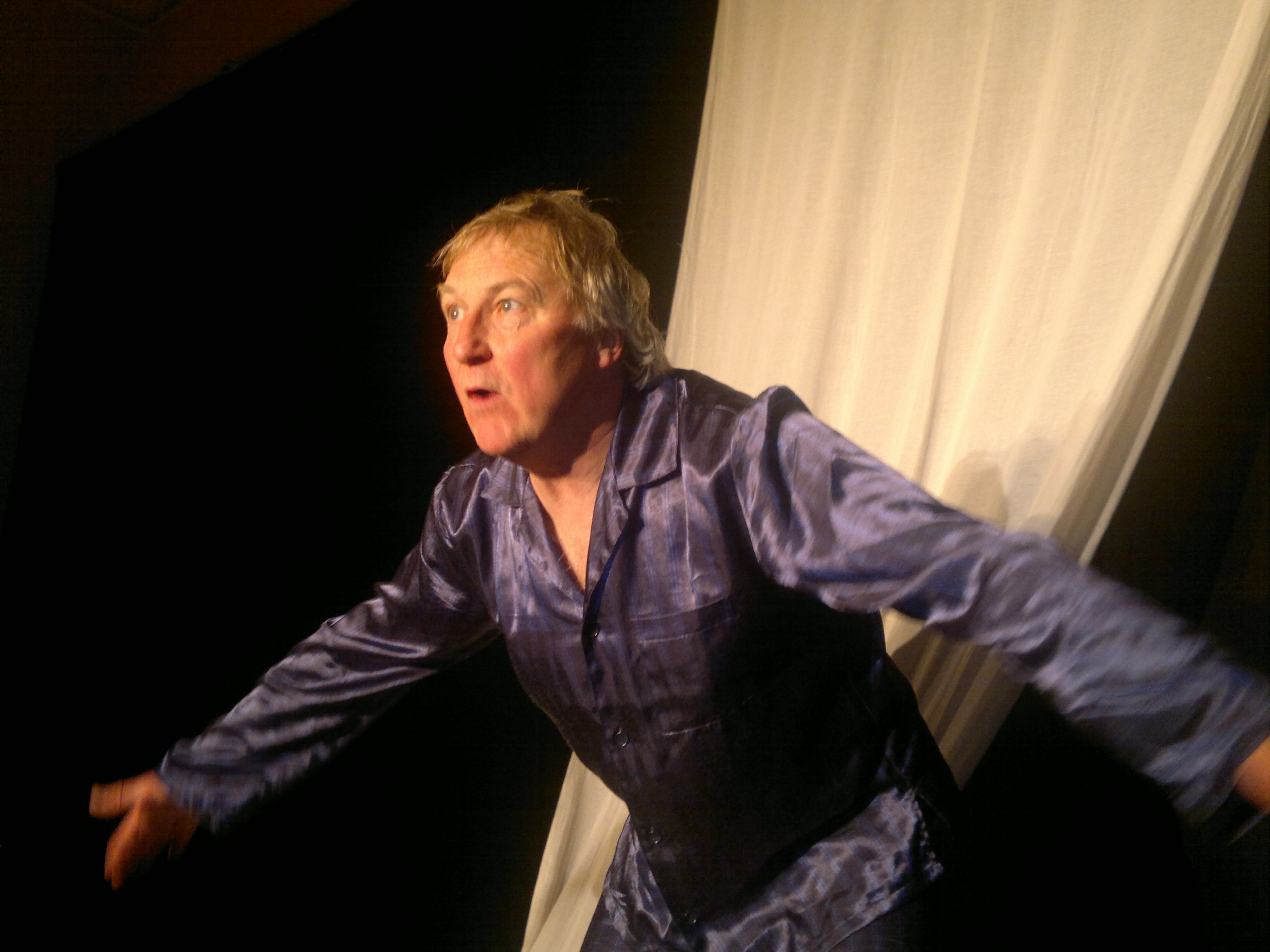
Catalpa, written and performed by Donal O’Kelly, tells the story of the 1876 rescue of six Irish prisoners from the Freemantle colony in Australia on a whaling ship captained by Capt. George Anthony. Simply set with a long white sheet suspended in the centre of the stage, draped over a box being the only set pieces (excepting Knight’s keyboard and equipment), the emphasis is on the storytelling throughout the piece. This was a good move as O’Kelly demonstrates a true talent for telling a rollicking good tale. Switching between characters adeptly, creating clear images of every person in the audience’s minds, O’Kelly draws us into the tale; I found myself leaning forward in my seat, flinching, laughing, holding my breath, frowning, grinning and smiling with each twist and turn in the story. The sheet is used to great effect to compliment this, becoming waves, an old mother-in-law’s shawl, a wife’s scarlet dress, and bedclothes, amongst other things.

O’Kelly’s performance is accompanied live by Trevor Knight who ekes brilliance out of the keyboard, bringing the sea, whales and many other parts of the story to life through sounds and music. The lighting design, adapted for this tour by Ray Duffy, is simple yet stunning. It captured every mood in the piece, transformed O’Kelly’s appearance from character to character and further brings to life the captivating tale.

Having been on the go since it premiered 20 years ago, Catalpa has probably clocked up more miles than the original ship, touring numerous Irish venues, travelling to the 1996 Edinburgh Fringe Festival (where it earned itself a first), and to myriad other international engagements from the Chicago Humanities Festival to the Harare Festival of the Arts Zimbabwe. It has deserved the run it has had and the status it has earned as a classic of contemporary Irish theatre; this show is an example of one of my favourite types of theatre. An engaging, exciting, funny and moving piece, Catalpa is intimate, enthusiastic, uncomplicated storytelling at its finest.