Glowworm – Review

Originally published on The Reviews Hub

Project Arts Centre

Tiger Dublin Fringe

11/09/16

glowworm.png

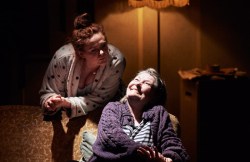
Zelle De Brulle is different, she knows that, and for the most part she is happy as she is. She contentedly catches and studies her insects, follows in the footsteps of her eccentric uncle William Charles Bugboy De Brulle, and is rarely ever noticed by her Oxborough schoolmates. However one evening, upon catching a glow-worm in the Oxborough gardens, Zelle is reminded of part herself that she had forgotten or pushed away and a new realm of discovery is opened to her.

In the charming setting of William Charles Bugboy De Brulle’s laboratory (brilliantly created under production designer Hannah Bowe) the three actors, Julie Maguire, Conor O’Riordan and Maria Guliver, adeptly bring a host of vibrant characters to life as they try to understand why Zelle does not put the Glowworm in “the killing jar” and pin it to her corkboard like all of her other specimens. As they do so, the audience is guided through Zelle’s experiences of growing up in a reserved Victorian household, her friendship with her uncle, her solitary schooldays, a bizarre encounter in an elderflower thicket, and the other joys and difficulties she found in growing up.

Through a miscellany of music, puppetry and storytelling, this delightful piece is perfectly paced and well-rounded. Kellegher’s sharp, insightful direction provides a balance between sweetness and satire that places this as a family show, neither just for adults, nor just for children.  Also deserving of praise is Dylan Tonge Jones’ composition and sound design, which he performs live during the show. It is not just music, it is a whole layer to the story-telling with every quick musical reaction conveying as much information and emotion as a whole other character could.

Glowworm is a charming, multi-faceted production that blends insightful storytelling with beautiful design to create a true theatrical delight.

Glowworm runs in Project Arts Centre until September 17th.

Cuncrete – Review

Originally published on The Reviews Hub

Smock Alley Theatre Black Box

Tiger Dublin Fringe

10/9/16

cuncrete_smockalley_ctdff

Presented by Rachel Clerke and the Great White Males, Cuncrete is a production with an interesting germ of an idea. Using concrete as a metaphor,  Clerke and the band create a drag-king punk gig exploring capitalism, hegemonic masculinity and the strong ties between the two. However, there is too little exploring for Cuncrete to develop from a good idea to a good production.

The tone and pacing for the piece is set from its opening section; a long, repetitive musical build up to the entrance of Clerke. The production maintains a slow drawling pace, setting up the idea of what they describe as a “dysto-utopia” and introducing the Great White Males. This could have been forgivable had there been a development of the ideas through the show, but once Clerke and The Great White Males had laid out their premise in their opening number (which was reprised in an uncalled for encore) they simply went on to repeat and re-iterate that in their subsequent songs. There are moments of amusing satire, such as in the descriptions of the band members, but even then they rely on reductive and stereotypical character types. Similarly there are some strong images, but they are often tempered by weaker ones (there are only so many times the image of a rich person snorting cocaine, or a symbolic substitute, can be edgy) Throughout, this feels like a production that could go somewhere, but always leads to an anticlimax.

Cuncrete is a 55 minute show that is 45 minutes too long. Had the original idea evolved, it could have been an engaging and sharp production, but as it stands it is an over-simplified and under-developed piece.

Cuncrete runs in Smock Alley Theatre until September 13th.

trhlogo


.


Hot Brown Honey – Review

Originally published on The Reviews Hub

Spiegeltent, Tiger Dublin Fringe

10/9/16

hot-brown-honey-pic

Briefs Factory’s feminist cabaret and burlesque extravaganza, Hot Brown Honey, has the audience crying with laughter, whooping, clapping and stamping their feet, but it isn’t from this that the show gets its electric energy. The Honeys are a group of women who are unashamedly angry and this is a show that makes no question of its bold intention to smash the patriarchy.

In a series of vignettes, the Honeys present the audience with well worn images and stereotypical characters before turning each and every one on its head. In one instance the audience is introduced to a “typical Samoan woman,” a romanticised idea of a woman in nothing but a leaf skirt sitting weaving herself new clothes from leaves. However, this illusion is shattered in moments as she turns and performs an impressive reverse strip-tease with a costume that seems impossibly, magically versatile. Another example is the caricaturing of characters that are defined by their physical features as Busty Beats appears wearing a costume with breasts the size of beach balls.

While most of their routines have a sizeable dash of the ridiculous and over-the-top about them  (one needs only to have seen the costumes for the “Don’t Touch Her Hair” number to know that) that does not detract from the weight of the message in each segment.  Tearing into questions of sexism, racism and homophobia, and tackling results of colonisation, the Honeys leave the audience in no doubt as to just how serious they are. This may be an audacious, entertaining and fun show, but it also leaves a sobering mark.

Through a fierce cabaret of hip-hop, song, circus and politics, Hot Brown Honey takes the audience through a whistle-stop tour of intersectional feminism and provides plenty of laughs and sass along the way. As the Honeys themselves say, “fighting the power never tasted so sweet.”

Hot Brown Honey runs until September 16th in the Spiegeltent at Merrion Square.

trhlogo


Mimes in Time – Review

Science Gallery

Tiger Dublin Fringe

14/9/16

mimesfringe_sm-720x320

Since a few paragraphs of laughs, giggles, snorts, chuckles and so forth is apparently not an acceptable review, I will tell you that Mimes in Time is an hilarious escapade through all time in one hour.

Written by Stephen Colfer and Heber Hanley,  and directed by Jeda de Brí, Mimes in Time tells the story of two time-travelling mimes (quite a commonplace profession in 3016) who, having spilled tea on their time machine find themselves living all time at the same time. As they try to sort out their mess, fix their childhood problems, straighten out the timelines and decide whether it is a good idea to kill Hitler, they take the audience through an exuberant tumble through time.

As Colfer and Heber Hanly leap about the stage and play Colfer’s script with energy and impeccable comic timing, belly laughs and madcap antics abound. Where the script lacks sense in some places, it more than makes up for it in entertainment with Colfer’s clever word-play and and some absurdly meta moments providing hilarity and bafflement in perfect measure.

Mimes in Time is an enthusiastically bizarre and entertaining journey through time, and space with an uproarious pair of mimes.

Mimes in Time runs in the Science Gallery Dublin until September 17th


Rising – Review

Dublin Youth Theatre

Peacock Theatre

19/8/16

rising

Some productions are made for the stage. Dublin Youth Theatre’s Rising, though it takes place in the Peacock, and with great success, is not one of those productions. This show, developed by Helena Enright, Tom Creed and the cast, is the sort of production that should stop the traffic on O’Connell Street, interrupt the feeding of ducks in Stephen’s Green or stir up the orderly queue at the Tesco checkouts. Described as a “wide-ranging contemporary look at what revolution means to young people now,” this production uses archive material, interviews, iconic songs and the boundless energy of the 20-strong Dublin Youth Theatre cast to awaken a range of ideas and ask vital questions about revolution, youth, art and activism.

In a series of vignettes, working with movement, music and text, the production explores various social issues and political causes through the years, probing the reasons behind why people engage, what makes people care. Decked out in an array of shirts and badges from the Palestinian Freedom Theatre, the Repeal the 8th movement, the Yes Equality campaign, and many others, the cast presents a strong ensemble that, though they may not all be united in the same causes, are powerfully united in their energy and enthusiasm towards taking a stand and making a difference.

Not only do the cast present a strong political energy, they also produce an impressive work in terms of artistic quality. The versatility of the performers, with many doubling as musicians as well as actors, and all engaging in dynamic movement pieces was impressive and engaging. Alongside this, Sarah Jane Shiels’ lighting design is the North Star guiding the energy of the piece, as even the most subtle changes in lighting have a pointed effect on the mood and perfectly parallel the tone of the script.

Rising will make you reconsider any presumptions you may have had about young people’s supposed political apathy, and leave you inescapably and inexhaustibly awake.


Eamonn (From Menswear) – Review

Ill-Advised Theatre Company

Smock Alley

1/8/16

eamonn.jpg

Photo Credit: Ste Murray

Eamonn (from menswear) is 25, a dad, and he is here to tell you about his life. Through a combination of rhymed verse, song and straight talking, Fionn Foley tells the age old story of a man learning to overcome prejudices as he faces the challenges that come with raising a family and traversing everyday life. Recounting his experience of working in a menswear department, of bringing up his daughter and of awkward encounters with his neighbours, Eamonn gradually reveals his closed “us and them” mentality. He thinks people are sound, as long as they are like him. As he works his way through the mundane challenges of life, he sees nothing wrong with this outlook, but all is not as it seems and Eamonn is about to be taught a serious lesson in a bizarre setting.

Foley creates an entertaining and engaging production, bringing it to life with his dynamic and enthusiastic performance. However, it must be said that the rhyming form was, at times, stretched to its limit and could have been more effective had it been interchanged with more prose style writing. When it worked, it was excellent, but at other times it felt as though the words were being roughly wrestled into verse. Despite this, Foley’s script is vivacious, madcap and delightfully frank. There is a self-awareness to his writing that wraps the audience around his little finger and has them rolling in the aisles. This is further complimented by Molly O’Cathain’s set design and John Gunning’s lighting design, both of which demonstrate a strong understanding of the space in which they are working and use the shape of the Boys School to great advantage.

Overall, though the basic plot is a time-worn tale, Ill-Advised Theatre Company put a fresh stamp on it in the exuberant and sharp Eamonn (From Menswear).

Eamonn (From Menswear) runs in Smock Alley until 6th August.


King Lear – Review

Originally published in TN2 Magazine.

learpurplecoat

Purple Coat Productions

Smock Alley

11/7/16

Shakespeare’s King Lear is a play of many layers, exploring the intensely personal hand-in-hand with the political. Telling the story of King Lear and his gradual descent into madness after dividing his property between his daughters according to their flattery of him, leaving his honest youngest daughter, Cordelia, with nothing, this play has the potential to sharply and insightfully examine ideas around power, madness, family, love and ageing.

A good production of King Lear depends on so much more than just the text. One such thing it depends on is a director to tease out the different themes, textures and ideas within the script. There is no teasing in Karl Falconer’s direction of this production. Throughout, the audience is presented with loud, brash images of incest, drug abuse and sexual assault that, in the context of the play, seem out of place and unjustified. The numerous instances of Lear groping his daughters and the violent sexual imagery that pervade the production suggest attempts at a cheap, base, and ineffective directorial shortcut to shock and an emotional response from the audience.  Similarly the inclusion of a poorly depicted cocaine addiction in Edmund’s character comes across as an attempt to shock the audience or assert the company’s non-traditional take on the play, but once again plays out as an unsuccessful shortcut.

Not only does the production fall short in terms of thematic execution, it also fails in numerous technical aspects of direction, performance and design.  Despite the fact that most of the ground level seating in the Boys School space is on the same level or a very slight slant, a large portion of the action in the play was placed downstage and close to the floor at a crouching level or lower to the ground. This meant that most of the audience were craning their necks and stretching to see what was happening; even though I was sitting in the centre of the second row, very close to the stage, I still struggled to see.  Though is a touring production, not one created within or for the Boys School space, it would have taken some relatively simple modifications to the direction to effectively adapt to the new space. Showing similar lack of foresight, parts of Alisha Johnson’s lighting design broke the flow of the piece as the lights came up on a number of occasions across the stage and audience, strongly suggesting an interval and leading to the audience starting to shift in their seats and move to clap. These are simple directorial and technical decisions that had an extensive negative effect on the production overall because of a lack of consideration of the audience’s position in the venue.

Some of the performances could have been salvageable had they not been fighting against poor direction. However, with shouting being used in place of nuanced emotion, an over-egged Poor Tom, and Lear being confined to one tiny upstage spot for what is arguably the most powerful speech in the play, there was no avoiding the myriad directorial issues.

Purple Coat take what they describe as Shakespeare’s “greatest, bleakest and perhaps last great play,” and deliver a coarse production that soon derails itself with cheap tropes and attempted dramatic shortcuts. To steal words from the bard himself, “Striving to better, oft we mar what’s well.”

King Lear runs in Smock Alley until the 12th July before touring.

Town is Dead – Review


Peacock Theatre, Dublin

09/06/16

Originally published on The Reviews Hub

town.jpg

Phillip McMahon and Raymond Scannell’s Town is Dead, tells the story of Ellen, a woman in her late sixties, as her estranged husband’s daughter appears on her doorstep while she is in the midst of packing up to leave her apartment. Described as “a play within music,” this production takes some of the style and format of a musical or operetta and reclaims it for real life. Instead of drop-everything musical numbers, the music gradually builds and fades from speaking to singing with the tone of the text, keeping the story tied to real-life while effectively utilising the expressive power of music and movement.

McMahon’s writing is that of an artist with a deep understanding of not only his craft, but of his surroundings. In tune with every nuance of dialects and references, McMahon brings to life characters that one could easily bump into on the way out of the theatre or sit next to on the bus home, yet presents them in a fantastical way suited to his medium. This grounding in everyday characters, characters with little money but a wealth of experience, is reminiscent of works such as The Threepenny Opera. The audience is seeing, not a sequinned, time-stepping character from another world, a royal, a deity, a lofty tragic hero,  but characters who are as close to real people as they can be on stage.

Sarah Jane Shiels’ lighting also plays an enormous part in the building and fading of tone in this play. Perfectly balanced, the design asserts itself throughout; nothing seems extraneous or incidental. Bathed in Shiels’ lighting design is Paul O’Mahony’s set, which is also well considered to compliment the tone of the play. The screen half-concealing the musicians (which Shiels and McMahon make excellent dramatic use of ) and the slanting, oddly-angled walls of the apartment suggest the unusual interplay between the gritty realism of the story and the theatrical style of the piece.

Town is Dead faces harsh experiences and challenging issues head on with balance, insight and style.  In Dublin’s answer to Brecht and Weil, McMahon and Scannell create a play that is at once highly theatrical and powerfully down-to-earth.

Town is Dead runs at the Peacock until 9th July.

trhlogo

Revolver – Review

sugarcoat.jpg

Sugar Coat Theatre

Theatre Upstairs Dublin

24/05/2016

Described as “an imperfect couple’s search for the perfect date,” Seanan McDonnell’s Revolver is a funny and thought provoking piece of theatre that delights in the word-play and gradually growing web of interlocking information that it creates.

This production tells a simple story of two people on a date with “everlast.com” where they can press a button to reset their date at any point if something goes wrong.  This leads to a cycle of sometimes similar, sometimes wildly different first impressions, conversations and conclusions in the search for the perfect date.  Though the repeated, cyclical nature of the script can sometimes begin to feel repetitive, McDonnell adeptly holds the audience’s attention with clever word-play and sharp one-liners.

Capturing the comic timing of McDonnell’s lines sharply and playing with the script’s theatrical self-awareness, both Colm O’Brien and Charlene Craig as Ben and Bea deliver engaging and entertaining performances under the direction of Matthew Ralli.

Revolver prompts the audience to think on interesting questions about love, honesty, deception and perfection. There is a subtle but definite dark undertone, suggesting an impenetrable, inescapable search for perfection. However, first and foremost this is an hilarious and entertaining piece of theatre that, as the gales of laughter from the audience can testify, is well worth a watch.

Northern Star – Review

mccurryandwhite

Rough Magic

Project Arts Centre

27/04/16

“We botched the birth,” says Henry Joy McCracken, speaking of his and his fellow “Mudlers’” attempt to bring their idea of Irish independence to fruition. The same phrase could be applied to describe Stewart Parker’s Northern Star. Rough Magic’s production is a good production grappling with an unwieldy play.

Northern Star tells the story of the seven ages of Henry Joy McCracken, as he reflects on the past seven years while hiding in a safe house with his partner and child on the run from the Yeomanry. Parker writes each age of McCracken in the style of a different writer, working his way through the Irish canon from Sheridan to Beckett. This ode to the canon, and examination of the theatricality of the rebellion and representations of it, seems a clever device. However, the changes between the writing styles, and the emphasis put on them means that the plot is often smothered in Wildean foppery or Beckettian linguistic play and patter. This issue is compounded by a lack of finesse in reproduction of many of the writers’ styles, leaving the watcher with a sense of having seen an empty, superficial imitation. While the performers and audience are caught up in this romp through the many styles of the Irish canon, it seems that the plot sometimes puts its feet up and dozes off.

This production does, however, deal well with the script. The suggested doubling of characters is well executed, with the changes to the actor playing McCracken in each age effective in allowing the “main” McCracken (played by Paul Mallon) to observe and reflect on the memories, as well as keeping a freshness in each segment. The performances were, on the whole, impressive, with Charlotte McCurry and Ali White delivering particularly good turns as Mary Bodle and Mary-Ann McCracken. Zia Holly’s set, based in the wings of a theatre, was cleverly conceived to compliment the conscious theatricality of Parker’s writing. This did, however mean that it did, at times, fall into the same trap as Parker’s writing in that it distracted overly from the plot and action. The solemn tenderness of Mary Bodle singing a heartbreaking song about McCracken to their son is somewhat distracted from by a large plush shark sitting just behind McCurry.

Northern Star is a play which tells a compelling story, and which employs and explores interesting theatrical styles and devices. Both are positive features, but unfortunately in this situation neither compliments the other, leaving both falling short.  Though Rough Magic bring high quality performances and design to the production, they still fail to provide the clarity this play needs.

Northern Star runs at Project Arts Centre until 7th May before touring.